

 en
en es
es pt
pt zh
zh


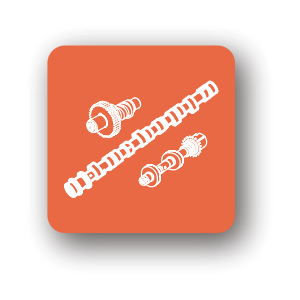





Balanced engines are essential for smooth operation and increased durability. Through intricate design, the components work together to minimize vibrations.
Understanding Balance Shafts
Balance shafts are critical in reducing engine vibrations, especially at high engine rpms.
Typically used in inline-four engines, balance shafts have eccentric weights and rotate in the opposite direction to each other. This rotation cancels out the net vertical forces that cause engine vibrations.
The shaft gears drive balance shafts via a chain or belt, integrating seamlessly with the engine's design.
The Role of Crankshafts and Pistons
The crankshaft and pistons are fundamental for the engine's power generation.
Pistons move in a linear pattern within the cylinders due to combustion forces. This motion is transferred to the crankshaft which turns it into a rotation that powers the vehicle.
However, this process creates inertia that leads to imbalance and vibration.
Counterweights and Their Function
Crankshaft counterweights are vital for balancing, designed to offset the weight of the pistons and connecting rods.
| Component | Function | Contribution to Balance |
|---|---|---|
| Crankshaft Counterweights | Offset weight of reciprocating components | Reduce vibrations by creating balance |
| Balance Shafts | Counteract unbalanced forces | Improve smoothness throughout rpm range |
They ensure that as the crankshaft rotates, the engine remains as smooth as possible.
High engine performance and longevity are closely tied to how well an engine is balanced. As such, engine balance isn't just an afterthought; it's integral to modern engine design and a testament to advanced automotive engineering.